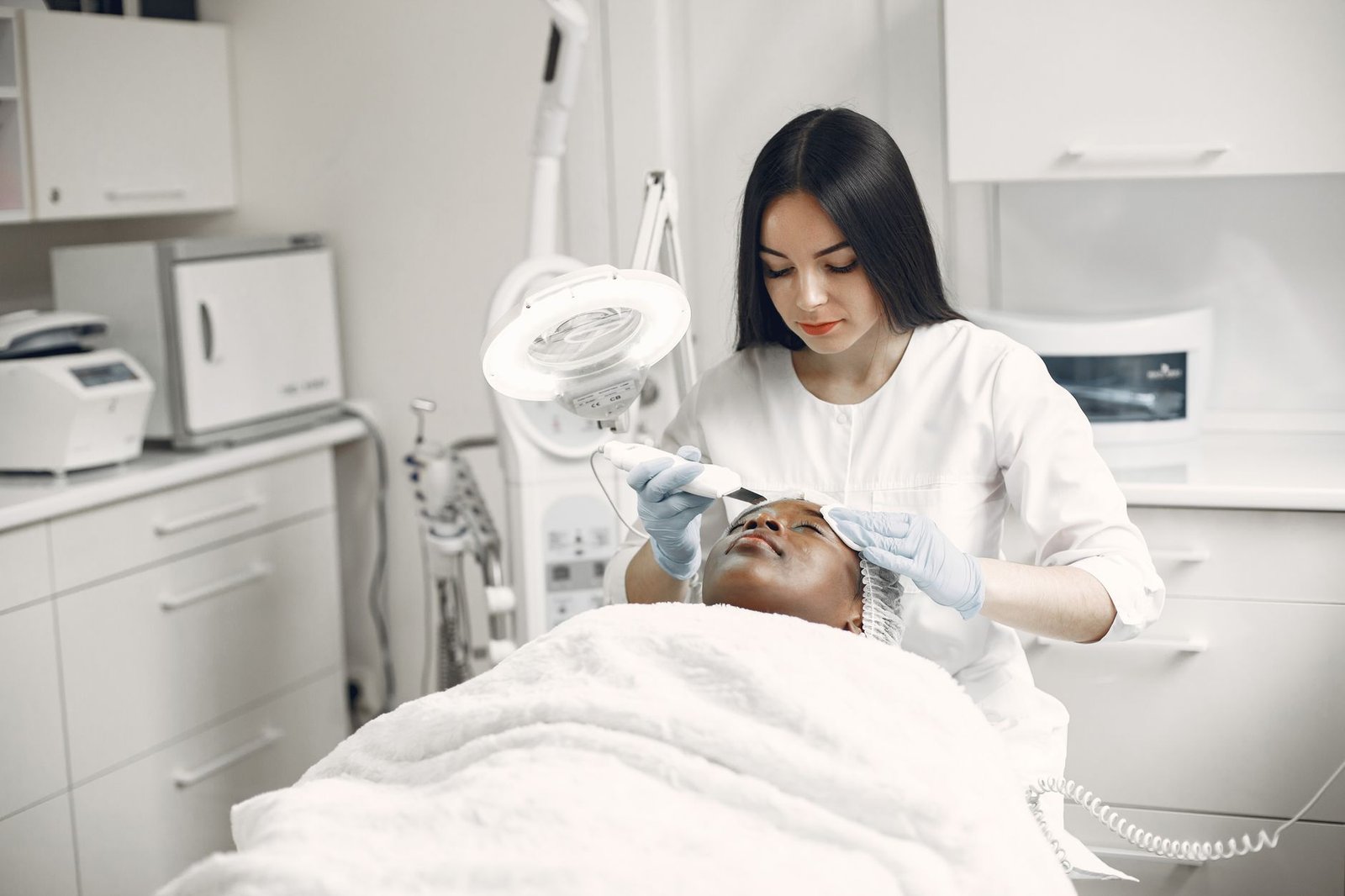
If you’ve spent any time on skincare TikTok, or sat in a waiting room flipping through a spa menu, you’ve probably seen the word “microneedling” tossed around next to promises of smoother skin, faded scars, and fewer fine lines. It sounds a little intense, and honestly, it kind of is. But once you understand what’s actually happening under the surface, it’s a lot less mysterious than it sounds.
The short version
Microneedling is a skin treatment that uses a device covered in very fine, short needles to create tiny, controlled punctures in the top layer of your skin. That’s the whole mechanism. The needles are typically somewhere between 0.25mm and 2.5mm long, depending on what’s being treated and who’s doing the treating.
Those punctures are so small you can’t really see them individually once the treatment is done. What you’ll notice instead is skin that looks a bit flushed, almost like a mild sunburn, for a day or two afterward.
Why poking tiny holes in your skin is the point
Here’s the part that trips people up: the tiny injuries aren’t a side effect you have to tolerate. They’re the entire reason the treatment works.
Skin is smart. When it senses damage, even damage this small, it kicks off a repair process, and that process includes producing more collagen and elastin, the two proteins responsible for keeping skin firm, plump, and elastic. As we get older, or after sun damage, acne, or just general wear and tear, natural collagen production slows down. Microneedling is essentially a way of telling your skin to get back to work, without doing anything as aggressive as a laser or a deep chemical peel.
You’ll sometimes see this called “collagen induction therapy.” Same treatment, more clinical name.
What it’s actually used for
Microneedling shows up most often as a treatment for:
- Acne scarring, especially the shallow, pitted kind
- Fine lines and early signs of aging
- Enlarged pores
- Uneven skin texture
- Some types of hyperpigmentation
- Stretch marks, in certain cases
It is not a reliable fix for deep wrinkles, active cystic acne, or loose, sagging skin. If someone tells you it can do everything, that’s a sign to keep asking questions.
Who actually performs it
Microneedling can be done by a dermatologist, a licensed esthetician, or a trained provider at a medical spa, depending on how deep the needles go and what your state allows. Deeper treatments, generally anything past the 1mm mark, are usually handled by medical professionals, because they get closer to live tissue and carry more risk if done incorrectly.
There are also at-home rollers sold for personal use, and it’s worth being upfront about those: they’re a different category entirely. At-home rollers use much shorter needles and are mainly meant to help your regular skincare products absorb better. They’re not deep enough to trigger the same collagen response you’d get from a professional treatment.
Who should think twice
Microneedling isn’t the right call for everyone. People with active acne breakouts, rosacea flare-ups, eczema, open wounds, or a history of keloid scarring are usually advised to skip it, or at least talk it through carefully with a provider first. It’s also generally avoided during pregnancy and by anyone on certain blood thinners or recent isotretinoin treatment. None of this is meant to scare you off, it’s just the kind of thing a good provider should ask about before ever picking up a device.
It’s not actually a new idea
Microneedling feels like a trendy skincare buzzword, but the concept has been around in some form since the 1990s, when dermatologists began using needling techniques specifically to treat scarring. What’s changed over the years is the equipment. Early versions were manual rollers; most professional treatments today use motorized pens that let the provider control needle depth precisely and adjust it across different areas of the face in the same session. That precision is a big part of why results have gotten more consistent over time.
What actually happens to the needles
This is a fair thing to ask about before you sit in the chair. Reputable providers use single-use, sterile needle cartridges that are opened in front of you and disposed of after your treatment, the same way a tattoo studio or piercing shop handles needles. If a provider can’t clearly explain their sterilization and disposal process, that’s worth treating as a warning sign, not a minor detail.
Does it hurt?
Most providers apply a topical numbing cream about 20 to 30 minutes before starting, so the sensation during treatment is usually described as a mild vibrating or scratching feeling rather than sharp pain. Areas with thinner skin, like around the mouth or hairline, tend to be more sensitive than the cheeks or forehead.
The bottom line
Microneedling is a controlled, minimally invasive way to encourage your skin to repair and rebuild itself. It’s not magic and it’s not an overnight fix. Most people need a series of sessions spaced a few weeks apart before they see real changes, and results build gradually as new collagen forms over the following months.
If you’re trying to figure out whether it’s the right call for your skin, that’s a conversation worth having with a licensed professional who can actually look at your skin in person, not a skincare influencer with a ring light.
Got questions about your skin or your brows? We’re always happy to chat — reach out anytime.